What the live dashboard is showing
The dashboard starts with a fitted surface and then layers live market context on top of it. That includes quoted option points by exchange, tenor summaries, node-level views, and calibration health indicators that can explain why a shape changed.
Core panels
- Variance and volatility smile curves by expiry
- Interactive 3D surface view for vol or variance
- Smile matrices with bid, ask, and last-trade IV points
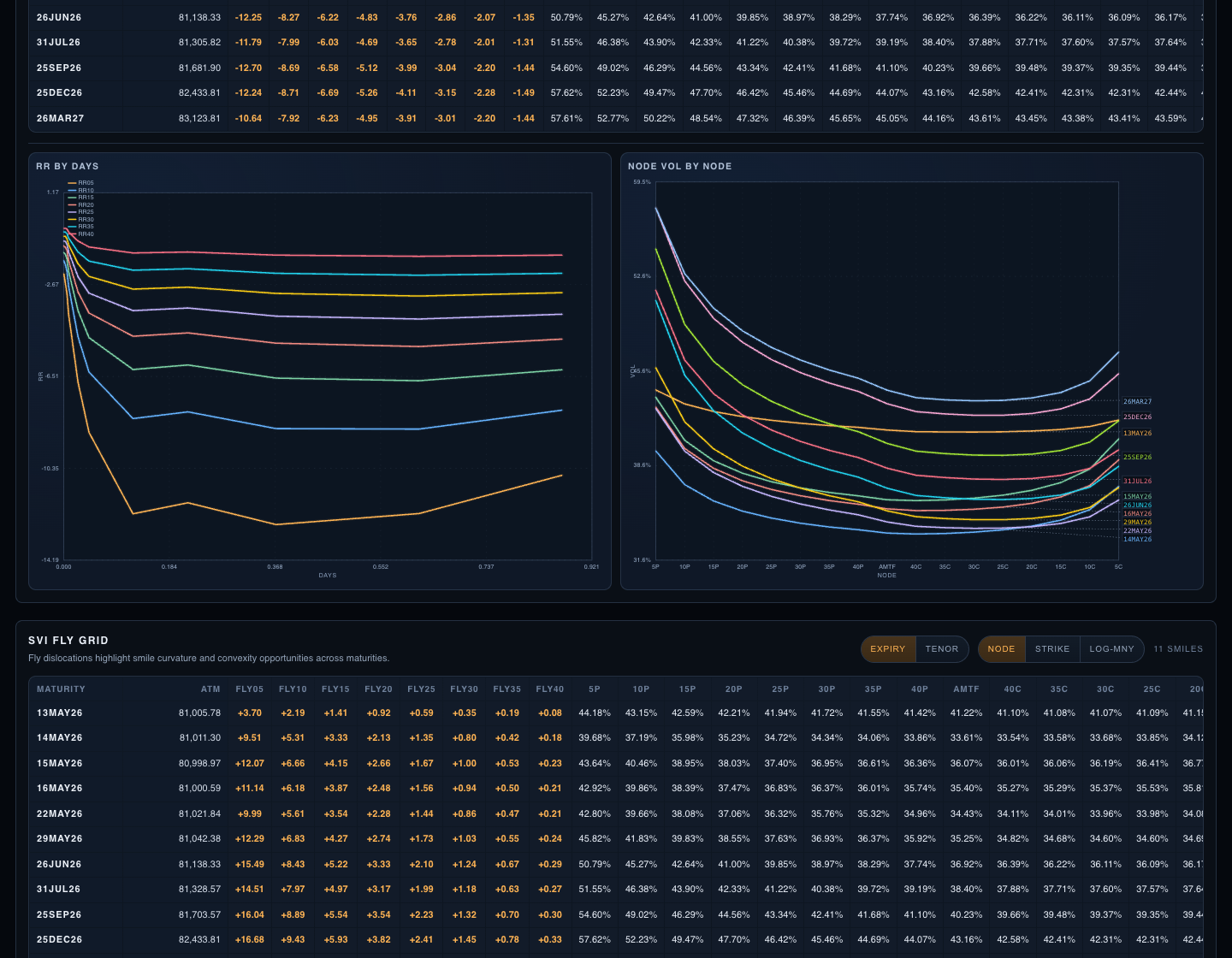
- RR and fly grids in expiry and tenor modes
- Fit diagnostics and g-test style fit views
What RR and flies mean
RR means risk reversal. It summarizes skew by comparing implied volatility on an upside call wing with implied volatility on a downside put wing at the same delta or moneyness bucket. A fly summarizes curvature: how expensive the wings are versus the ATM area of the smile. Together, RR and fly nodes make BTC, ETH, and altcoin smile shape easier to scan than raw strike-by-strike IV.
What the Fit tab shows
The Fit tab shows the fitted variance view, fitted volatility view, 3D surface projection, and g-test diagnostics published by the engine. Those diagnostics are how the UI exposes arbitrage conditions: butterfly-style smile checks, calendar consistency across expiries, and fit-error movement over time. The variance lines are total implied variance slices by expiry, which are the native SVI fit objects before conversion back into volatility.
Why real time matters
Surface quality is not static. Quotes move, liquidity shifts, and venue overlays can disagree. A real-time dashboard makes it easier to distinguish structural repricing from transient dislocation, stale venue levels, or temporary calibration stress.
How updates are delivered
The UI is driven by websocket snapshots and patches. Full snapshots establish the current state, while sparse patches update only the expiries or derived views that changed. That keeps the dashboard responsive under live market conditions.
Who this is for
The page is aimed at anyone monitoring an options surface in production: traders, quants, risk managers, and engineers who need to see both the market and the fit at the same time.